From Witness to Maker
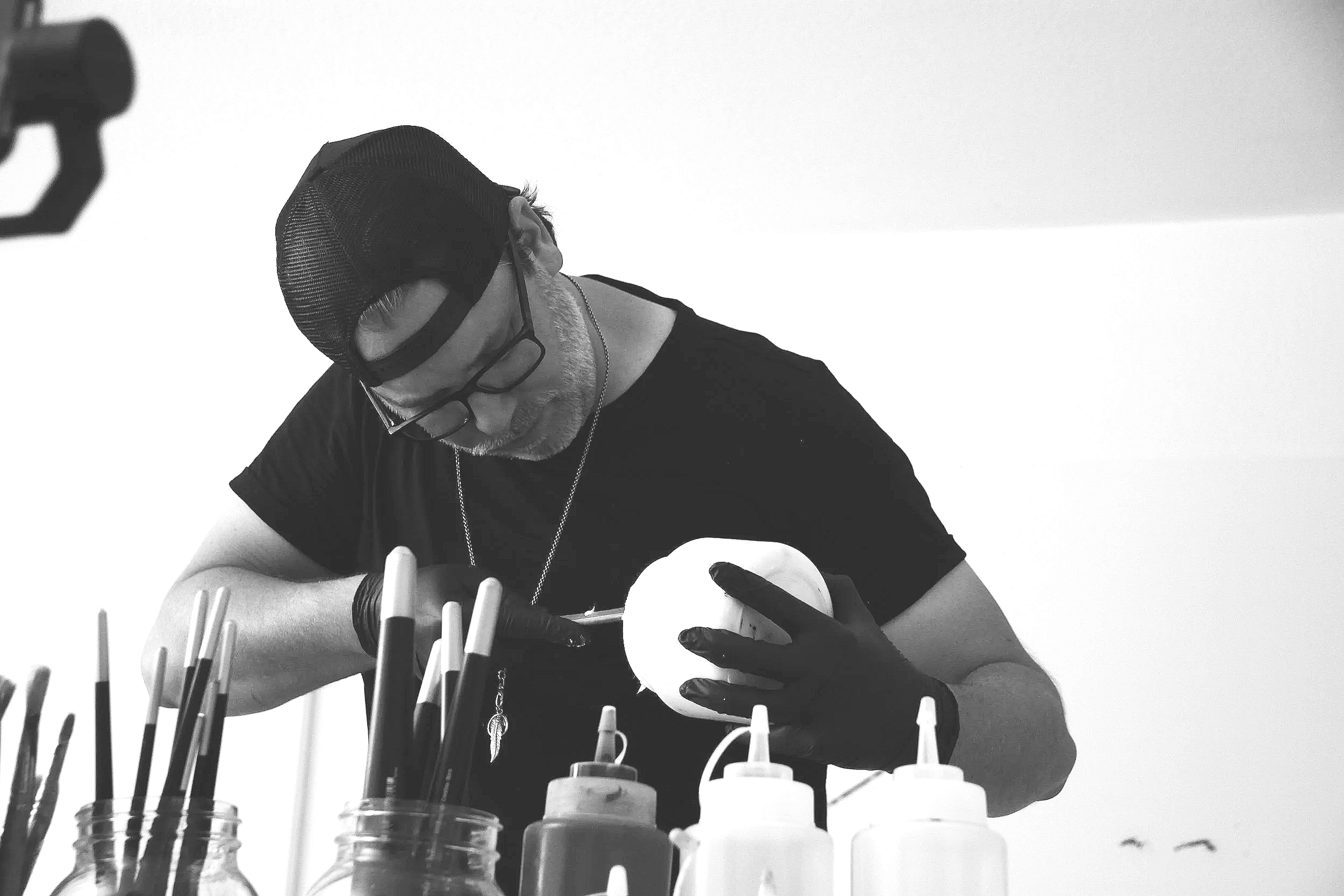
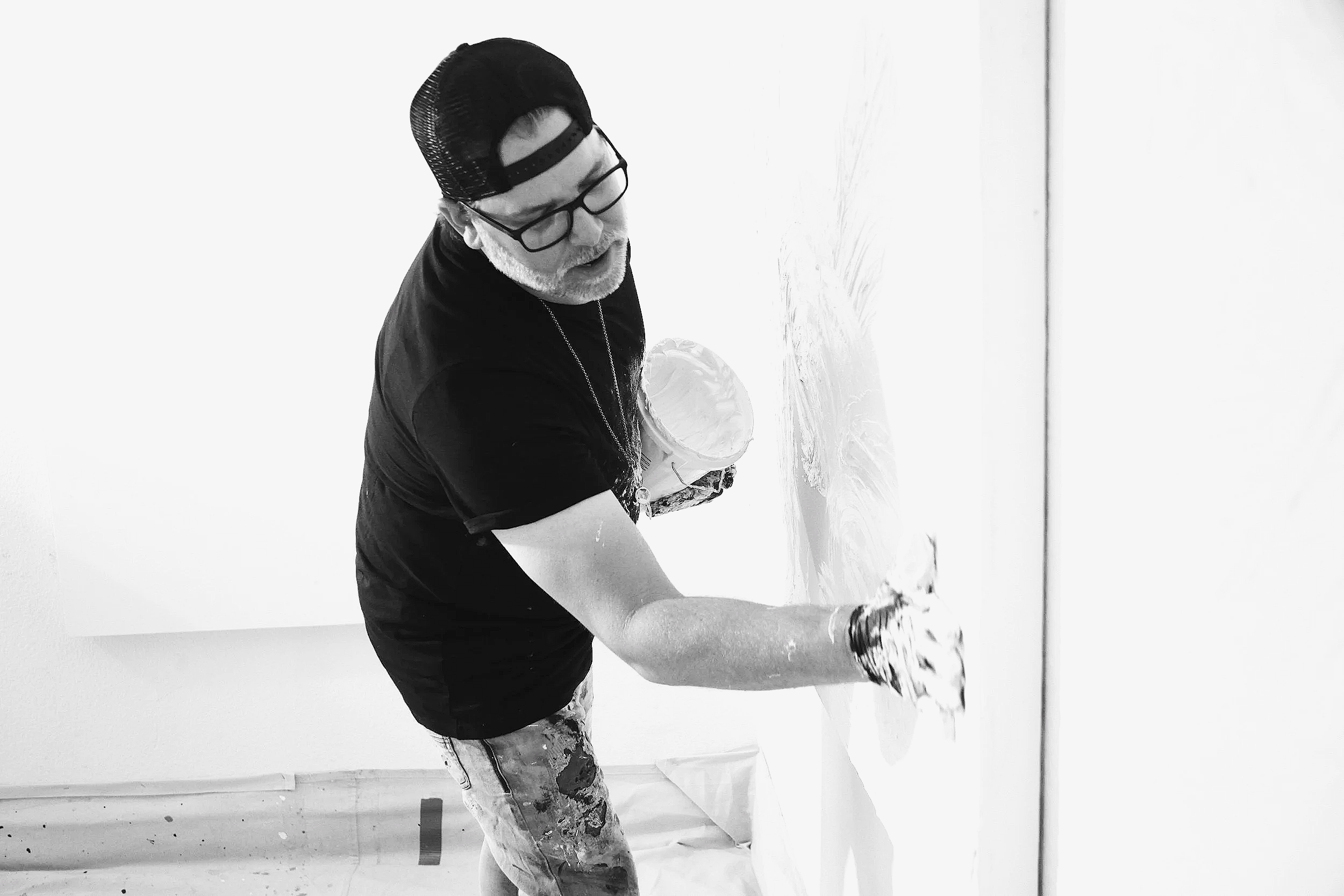
For years, I believed my role as an artist was to witness the world.
Only later did I realize I had been searching for a way to build one.
At the time, I didn't recognize the transition while it was happening.
There wasn't a single assignment that changed my life.
No final concert.
No defining photograph.
No morning when I woke up and decided to become a painter.
Looking back, the change feels obvious.
Living through it, the transformation was almost invisible.
I've come to believe that the most meaningful changes in our lives rarely announce themselves.
They arrive quietly.
One question replaces another.
One curiosity slowly outgrows the life that once satisfied it.
Only years later do we realize we have become someone different.
Throughout these Essays, I've written about observation, atmosphere, memory, process, texture, and the ideas that continue shaping my paintings. This section is more personal than the others. It is the story of how those ideas found me. It traces the journey from photographing musicians and documenting creative lives to standing alone in a studio, building paintings that ask many of the same questions through an entirely different language.
People often ask why I left photography.
The honest answer is that I don't think I ever truly did.
Photography still shapes every painting I make.
It taught me patience.
It taught me discipline.
Most importantly, it taught me how to pay attention.
Looking back now, I no longer divide my life into photography and painting.
I see one continuous conversation.
The camera and the brush simply became different ways of asking the same questions.
Photography taught me to witness.
Painting taught me to build.
That distinction has become one of the defining ideas of my creative life.
It reminds me that the medium was never the destination.
Curiosity was.
For most of my adult life, a camera rarely left my hands.
Photography carried me into theaters, arenas, recording studios, festivals, backstage hallways, and countless moments that most people never have the opportunity to experience firsthand. It introduced me to extraordinary musicians, artists, and creative communities, but what mattered most wasn't access.
It was perspective.
Night after night, I stood just outside the spotlight.
Close enough to witness creativity unfolding.
Far enough away to recognize patterns that many people never had the opportunity to see.
I watched artists return to the stage after difficult nights.
I watched songs evolve over hundreds of performances.
I watched confidence disappear.
I watched confidence return.
I watched extraordinary work emerge through repetition rather than inspiration.
Without realizing it, I wasn't simply documenting creative lives.
I was studying them.
Those years taught me something I still carry into every painting.
Meaningful work is rarely created in moments of certainty.
It is built through attention.
Patience.
Revision.
The willingness to begin again.
Photography gave me a front-row seat to that process.
Eventually, watching creativity was no longer enough.
I needed to discover what it felt like from the inside.
Learning to See
Long before I thought of myself as a painter, I was learning how to observe.
I've come to believe there is an important difference between looking and truly seeing.
Looking happens automatically.
Seeing requires attention.
It asks us to notice relationships rather than objects.
Atmosphere rather than information.
Presence rather than appearance.
Photography became my education in that way of seeing.
Every assignment challenged me to pay closer attention than I had the day before.
Light wasn't simply illumination.
It changed emotion.
Timing wasn't simply pressing a shutter.
It was recognizing the brief moment when everything aligned.
Composition wasn't about arranging subjects inside a frame.
It was understanding how every element influenced every other element.
Those lessons extended far beyond photography.
Without realizing it, I was training my mind to notice things that couldn't always be photographed.
The feeling inside a room before the lights dimmed.
The quiet anticipation backstage before musicians walked onto a stage.
The subtle shift in energy when an audience collectively held its breath.
The emotional weight carried by silence between songs.
Those moments fascinated me because they seemed to exist just beyond the reach of the camera.
I could document the people.
I could document the places.
What I truly wanted to understand was the atmosphere surrounding them.
Looking back, I think that was the first clue that photography alone would never fully satisfy my curiosity.
The photographs I value most today are rarely the loudest moments.
They are the quieter ones.
The seconds before something happened.
Or immediately afterward.
Those moments contain possibility.
Expectation.
Reflection.
They invite the viewer to complete the story rather than simply observe it.
I've realized that my paintings ask for exactly the same thing.
Perhaps that's why the transition from photography to painting feels so natural to me now.
The subject changed.
The way of seeing never did.
Many of the ideas that continue shaping my work eventually found their way into Learning to See and Paying Attention, but those essays grew from experiences long before I ever stepped into a painting studio.
Photography wasn't teaching me how to use a camera.
It was teaching me how to experience the world.
Only later did I understand that learning to see would become one of the greatest gifts photography ever gave me.
Watching Creativity From the Wings
People sometimes imagine that spending years around musicians was exciting because of the performances.
The performances were unforgettable.
They were never the reason I stayed.
What held my attention was everything most audiences never saw.
The rehearsals.
The conversations.
The uncertainty before walking onstage.
The small adjustments made night after night that gradually transformed a good performance into an extraordinary one.
I watched artists dedicate themselves to work that demanded remarkable patience.
I watched songs evolve over hundreds of performances.
I watched confidence disappear.
I watched confidence return.
I watched experienced musicians question themselves in exactly the same way young artists do.
Those years quietly dismantled one of the biggest myths surrounding creativity.
Great work does not appear fully formed.
It is revised.
Tested.
Refined.
Sometimes abandoned altogether.
The audience usually experiences only the finished performance.
I had the privilege of witnessing everything that came before it.
That changed me.
It taught me that meaningful work is built through persistence far more often than inspiration.
Years later, when I began painting, those lessons returned almost immediately.
Standing in front of a canvas didn't feel as unfamiliar as I expected.
The medium was different.
The creative process wasn't.
The same patience I had admired in musicians was now being asked of me.
The same willingness to revise.
The same trust that something meaningful could emerge through sustained effort rather than immediate certainty.
Much of what I later explored in What Touring Taught Me About Creativity began during those years, but the lesson that stayed with me wasn't really about music.
It was about making.
Watching hundreds of creative people dedicate themselves to their work gradually changed the way I understood my own life.
Without realizing it, I had spent years witnessing creativity from the wings.
Eventually, I felt an undeniable desire to step onto the stage myself.
Not literally.
Creatively.
That realization changed everything.
When Witnessing Was No Longer Enough
For a long time, photography answered every creative question I had.
Then, almost without warning, it began asking questions it could no longer answer.
That realization didn't arrive all at once.
It appeared quietly.
I found myself becoming increasingly interested in things that could not be photographed.
Memory.
Atmosphere.
The feeling a place leaves behind after everyone has gone.
The emotional weight carried by color, texture, rhythm, and space.
Photography could suggest those experiences.
I wanted to enter them.
That difference became impossible for me to ignore.
Photography begins with something that already exists.
A person.
A landscape.
A performance.
A fleeting moment waiting to be witnessed.
Painting begins with nothing.
An empty canvas doesn't ask what happened.
It asks what could exist.
That single difference transformed the way I thought about creativity.
For years, my work had been rooted in observation.
Now I was being invited into imagination.
Photography taught me to recognize moments.
Painting asked me to create them.
Photography rewarded decisiveness.
Painting rewarded patience.
Photography captured what the world offered.
Painting asked me to discover something that wasn't there yet.
I wasn't searching for another medium because photography had somehow become less meaningful.
If anything, my appreciation for it had only grown deeper.
What changed was my curiosity.
Eventually, I realized I wasn't trying to document the atmosphere anymore.
I wanted to build it.
That was a completely different kind of creative challenge.
I've often been asked whether I paint from my photographs.
The answer has always surprised people.
I don't.
The photographs had already given me what I needed.
Not images.
A way of seeing.
Photography became the foundation beneath my paintings, not because I translated photographs into paint, but because it permanently changed the way I observe, think, and respond to the world around me.
That realization eventually became the heart of Why I Paint Abstractly.
I wasn't abandoning one creative life for another.
I was allowing the same curiosity to continue evolving through a different language.
Learning to Trust What Couldn't Be Planned
One of the greatest surprises of becoming a painter was discovering how differently uncertainty behaves.
Photography contains uncertainty.
Painting lives inside it.
When I photographed musicians, uncertainty existed before I released the shutter.
Would the light change?
Would the expression last another second?
Would everything align at precisely the right moment?
Once the photograph was made, those questions disappeared.
Painting is different.
Every mark creates another question.
Every answer changes the next decision.
Nothing remains fixed for very long.
A painting is never simply executed.
It is discovered.
That realization fundamentally changed the way I understood creativity.
Instead of trying to control every outcome, I began learning how to participate in a conversation with the painting itself.
Some ideas survived.
Others disappeared beneath new layers.
Areas I initially loved sometimes needed to be painted over.
Unexpected accidents quietly became the strongest parts of the finished work.
The painting often understood where it wanted to go before I did.
Learning to accept that wasn't easy.
Like many artists, I wanted certainty.
Painting kept asking me for trust instead.
Looking back now, I think that lesson reached far beyond the studio.
It changed the way I approached uncertainty in every part of my life.
Not every answer needs to exist before we begin.
Not every path reveals itself immediately.
Sometimes the only way forward is to remain curious long enough for the next step to appear.
Those years taught me something photography never could.
Creativity isn't about controlling the outcome.
It's about remaining present enough to recognize possibility when it arrives.
That understanding eventually became the foundation of The Importance of Process in Contemporary Art.
The process isn't what happens before the artwork.
The process is where the artwork slowly discovers what it wants to become.
In many ways, I think the same could be said about people.
Sometimes we don't discover who we are until we allow ourselves to become something we never planned to be.
Finding My Own Visual Language
When I first began painting, I wasn't searching for a recognizable style.
I was searching for honesty.
That surprised me.
I assumed learning to paint would mostly involve understanding materials, color, composition, and technique.
Those things mattered.
They still do.
But I slowly realized they were only vocabulary.
The real challenge was discovering what I genuinely wanted to say.
That couldn't be borrowed from another artist.
It couldn't be copied from a book.
It couldn't be found by following trends or repeating what had already been done successfully.
It had to be earned.
Painting after painting.
Revision after revision.
Failure after failure.
Over time, something unexpected began happening.
Certain gestures kept returning.
Certain colors found one another again.
Certain textures refused to disappear beneath new layers.
At first I thought I was developing habits.
Looking back now, I think I was discovering a language.
Every artist eventually develops one.
Not because they choose it.
Because they slowly become unable to make the work any other way.
That realization changed how I think about originality.
Originality isn't trying to look different.
It is the natural result of paying attention to the same questions for so long that your answers gradually become impossible to confuse with anyone else's.
I don't think artists discover their voice.
I think they uncover it.
Layer by layer.
The more honestly I painted, the less interested I became in creating recognizable images.
I found myself drawn instead toward atmosphere.
Memory.
Physical presence.
The emotional space between certainty and ambiguity.
Those ideas weren't planned.
They emerged because they had quietly been following me for years.
Much of what I later explored in Atmosphere in Contemporary Painting, Texture as Visual Language, and Large Scale Abstract Paintings began long before I understood where those interests were leading.
The paintings simply revealed them before I could explain them.
Perhaps that is one of the greatest gifts painting has given me.
It often understands me before I understand myself.
The Studio Changed Me
People sometimes ask what painting has taught me.
I usually think they're asking about technique.
The honest answer is much more personal than that.
Painting changed the way I experience the world.
The studio became more than a place where I made artwork.
It became the place where I learned patience.
Humility.
Attention.
Resilience.
There is nowhere to hide inside a studio.
A painting quietly reveals every shortcut.
Every assumption.
Every attempt to force an answer that hasn't yet been earned.
Some days the work moves with surprising clarity.
Other days every decision feels uncertain.
I've come to value both experiences equally.
The difficult paintings have often taught me far more than the easy ones.
They forced me to slow down.
To look longer.
To let go of ideas that were no longer serving the work.
Those lessons eventually extended beyond painting.
They changed the way I travel.
The way I read.
The way I listen.
The way I pay attention to conversations.
The way I notice light entering a room.
Painting didn't simply become something I do.
It gradually became the way I move through the world.
That is one of the reasons I no longer separate photography from painting.
Photography taught me to observe.
Painting taught me to respond.
Together they continue teaching me how to remain curious.
Many of those ideas naturally continue through Identity & Practice, where I reflect on the values that continue shaping my work as an artist, while The Importance of Process in Contemporary Art explores why I believe the process itself remains inseparable from the finished painting.
The studio never simply taught me how to paint.
It quietly taught me how to become the person capable of making the paintings.
A Conversation That Never Ends
Looking back now, I no longer divide my life into photography and painting.
I see one continuous conversation expressed through different tools.
Photography taught me to witness.
Painting taught me to build.
Photography sharpened my attention.
Painting expanded my imagination.
Photography taught me to recognize meaning.
Painting taught me to create the conditions where meaning might emerge.
The medium changed.
The questions remained remarkably similar.
How does a place feel?
Why do certain memories remain while others disappear?
How can color, texture, rhythm, and gesture communicate something beyond language?
I don't expect to answer those questions completely.
In many ways, I hope I never do.
The moment an artist believes every question has been answered, curiosity begins to disappear.
For me, curiosity has always been the work.
The paintings simply become its visible record.
That realization has brought an unexpected sense of peace.
For years, I thought I had lived two different creative lives.
One behind a camera.
Another behind a canvas.
I no longer believe that.
The camera taught me to pay attention with extraordinary care.
The studio taught me what to do with that attention.
One prepared me for the other in ways I couldn't possibly have understood at the time.
Looking back, the transition feels inevitable.
Living through it, it never did.
Perhaps that is true of many meaningful transformations.
They rarely announce themselves.
They quietly reshape us while we are busy looking somewhere else.
From Witness to Maker
If there is one lesson that connects every stage of my creative life, it is this:
Art begins with attention.
Before we can make meaningful work, we must first learn to notice.
Photography taught me to notice.
Painting taught me to respond.
Photography taught me to witness the world with patience and humility.
Painting taught me to build one through memory, intuition, curiosity, and experience.
Together they continue reminding me that creativity has never been defined by a camera, a brush, or any particular medium.
It is defined by a lifelong commitment to remaining curious.
To paying closer attention.
To asking better questions.
To beginning again.
Every painting starts with an empty canvas.
Every painting asks me to trust uncertainty one more time.
Every painting reminds me that meaningful work is rarely discovered all at once.
It emerges through patience.
Through revision.
Through sustained looking.
Through the willingness to remain open long enough for something unexpected to appear.
That is what photography was quietly teaching me all along.
Not how to make pictures.
How to see.
Painting simply gave me another language for responding to everything I had learned to notice.
In the end, I don't think this journey was ever about leaving one medium behind for another.
It was about allowing one way of seeing to become another way of making.
Photography taught me to witness.
Painting taught me to build.
And somewhere between those two ideas, I finally discovered the artist I had been becoming all along.
Continue Exploring
If you'd like to explore the philosophy that continues shaping every painting I create, continue with The Work.
To learn more about the ideas of observation, curiosity, and artistic identity that grew from this journey, continue with Identity & Practice.
If you're interested in the materials, experimentation, and creative process that transformed those experiences into paintings, continue with The Importance of Process in Contemporary Art.