Artist Statement
Some of the experiences that shape us most deeply cannot be explained through words alone.
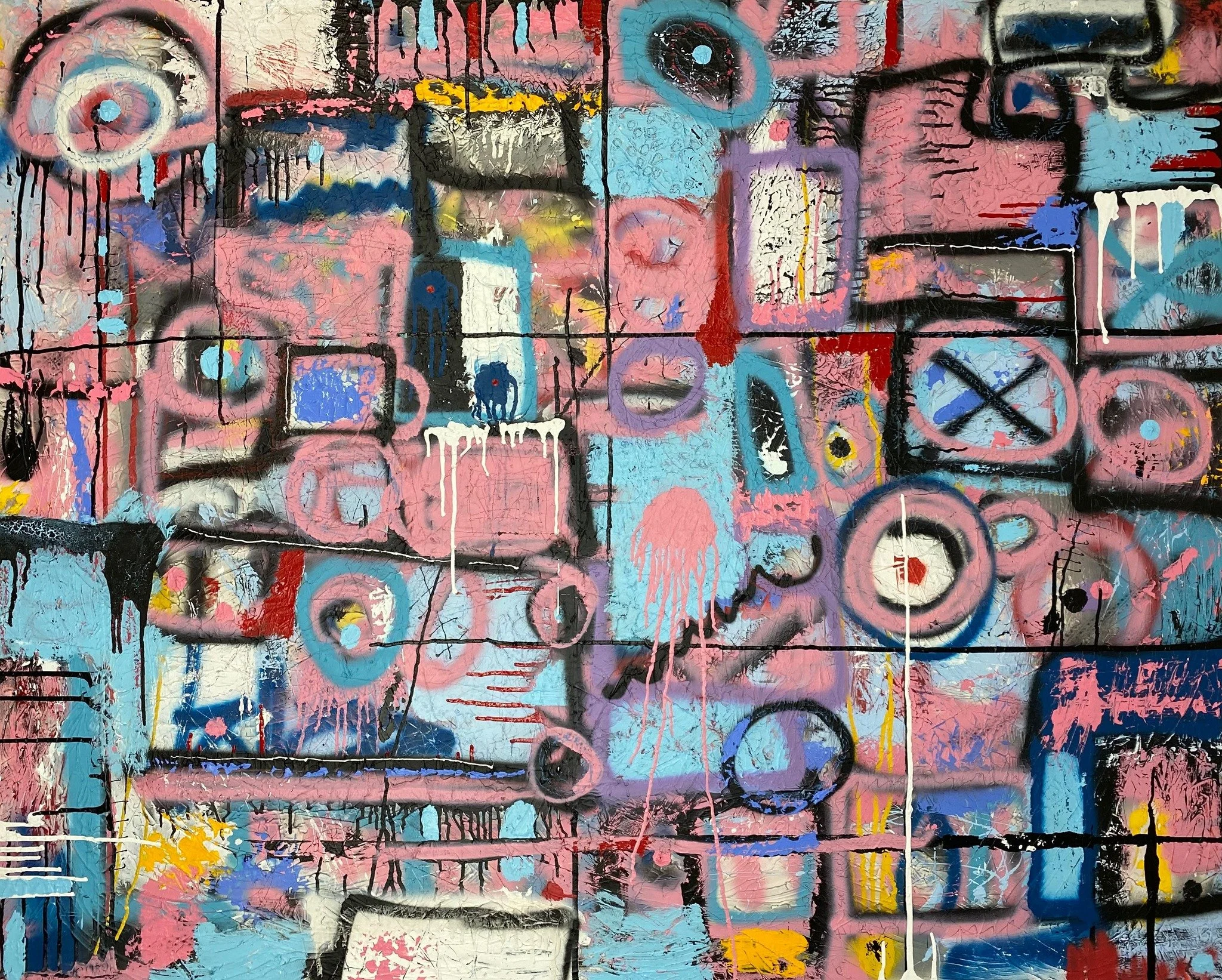
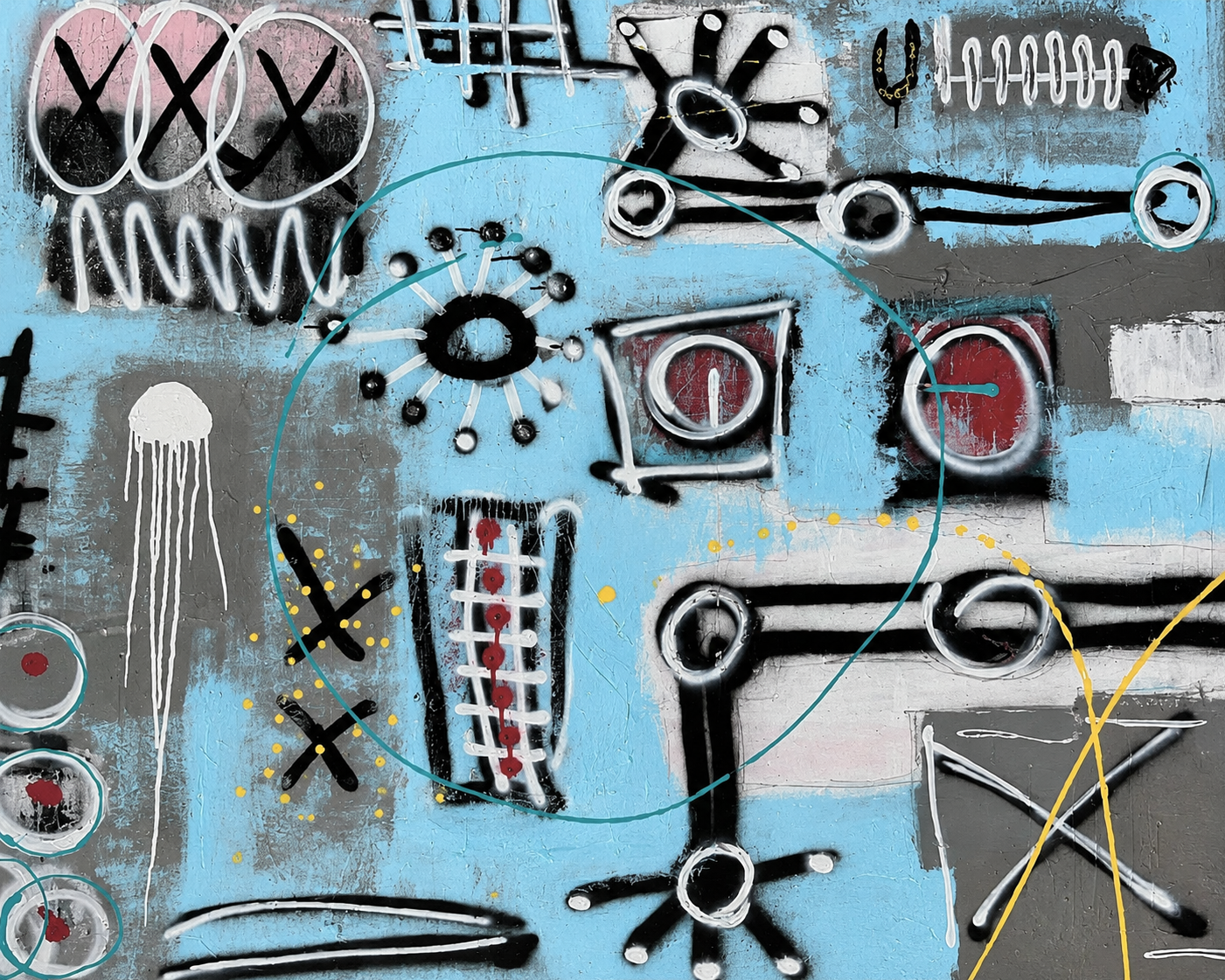
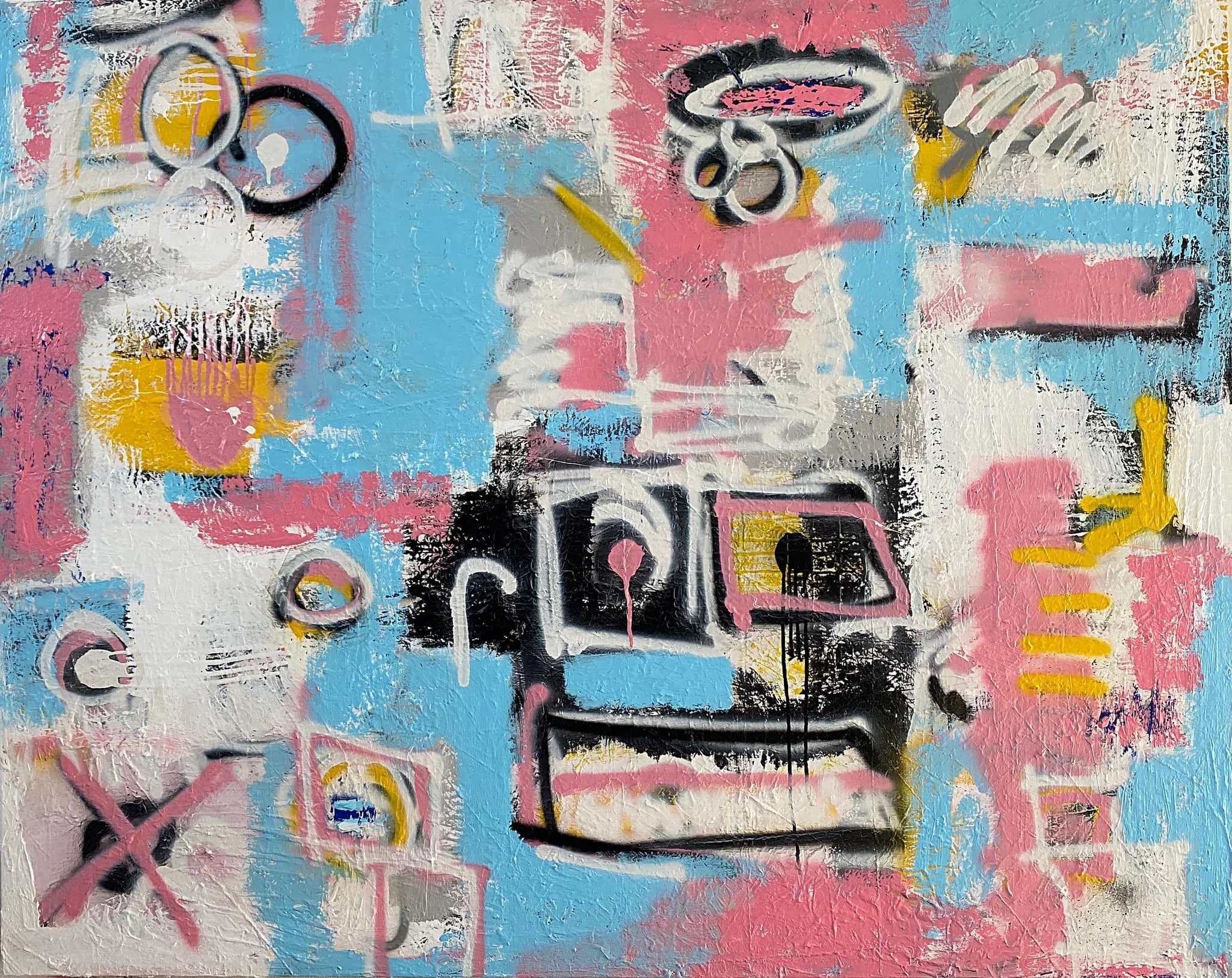
My paintings explore those experiences through abstraction, drawing on memory, atmosphere, rhythm, and the emotional traces that remain long after a moment has passed. I am less interested in describing the world than exploring what it leaves behind. I hope the work invites reflection rather than conclusions, allowing each viewer to bring their own experiences into the conversation.
Before painting, I spent years photographing musicians, artists, and life on the road. Photography taught me to pay attention—not only to the obvious subject, but to everything surrounding it: the atmosphere of a room, the character of a place, and the quiet moments that often reveal the most. What I once explored through a camera, I now explore through paint.
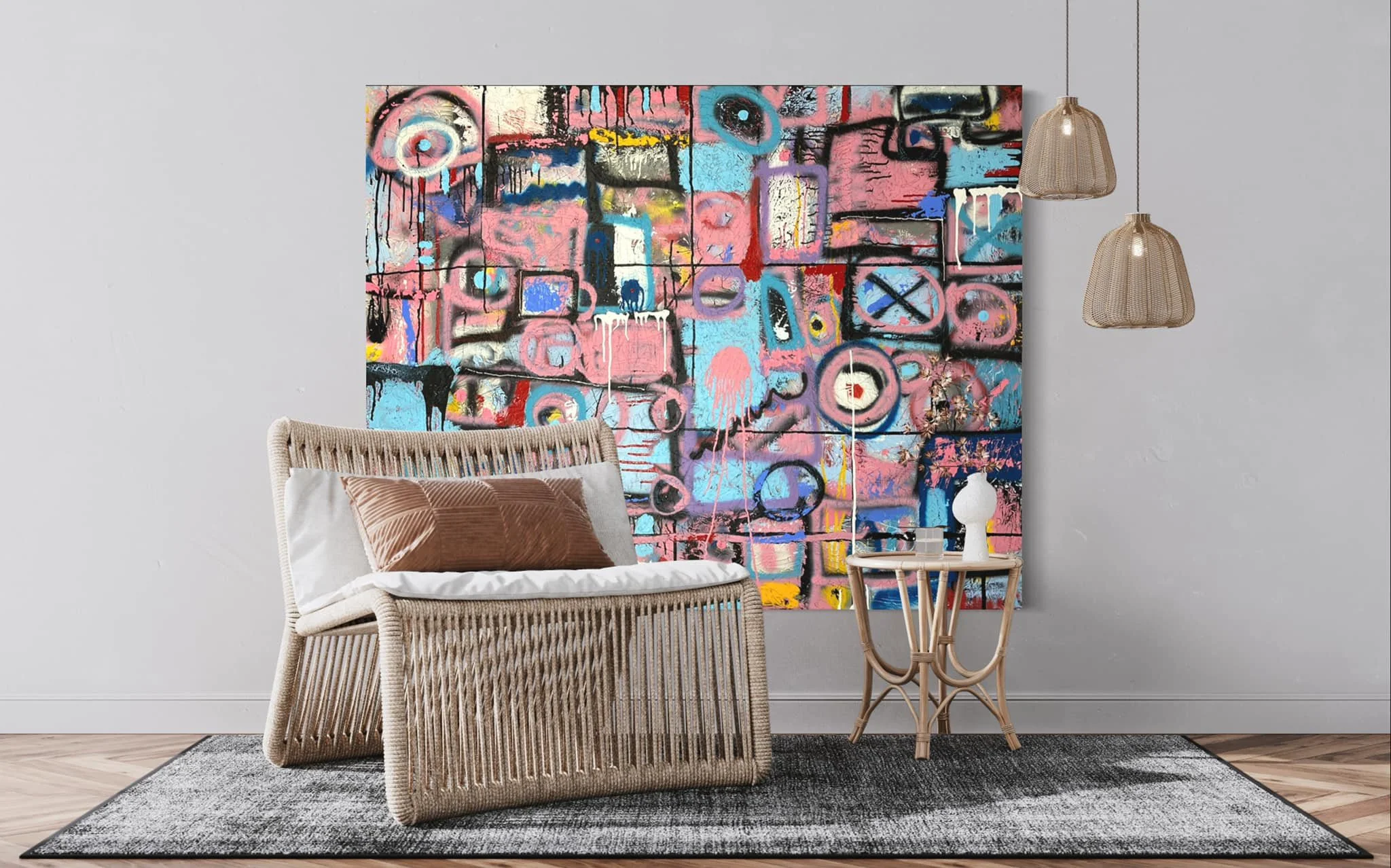
Scale is central to my practice. I paint large because I want the work to be experienced physically as well as visually. Through layers, texture, gesture, and revision, each painting reveals itself gradually over time. My paintings are not intended to provide answers. They are an invitation to slow down, look closely, and discover something that cannot be explained, only experienced.
If you'd like to explore the philosophy behind my work and the ideas that continue to shape my practice, I invite you to continue reading my longform Artist Statement.
For readers interested in the story behind my transition from photography to painting, I've written a longer essay titled From Witness to Maker.
Christopher
I am an abstract artist based in Austin, Texas.
Before turning my focus to painting, I spent more than a decade documenting music, culture, and life on the road as a photographer. My work took me behind the scenes of concerts, festivals, tours, and cultural events throughout the United States and Europe, providing a unique perspective on contemporary music and creative communities.
In 2026, I shifted my creative practice toward large-scale abstract painting. Working primarily in mixed media on canvas, I create large-scale works that explore surface, texture, and scale through an intuitive and evolving process.
I live and work in Austin, Texas.
To learn more about my evolution from photography to painting, read From Witness to Maker.
Studio Perspective
Most paintings begin with a simple starting point rather than a clear destination. I rarely approach the canvas with a fixed image in mind. Instead, I allow the painting to develop gradually through a series of decisions, adjustments, and revisions.
Much of my time in the studio is spent looking. I pay attention to relationships between color, texture, space, and gesture, making small changes that can alter the direction of a painting in unexpected ways. Some areas are built up over time, while others are reduced or removed entirely as the work evolves.
I am less interested in control than I am in attentiveness. The studio is a place where I can slow down, focus on what is happening on the surface, and remain open to possibilities that emerge through the work itself. A painting is finished when it begins to feel complete on its own terms and no longer asks for my intervention.
Materials & Process
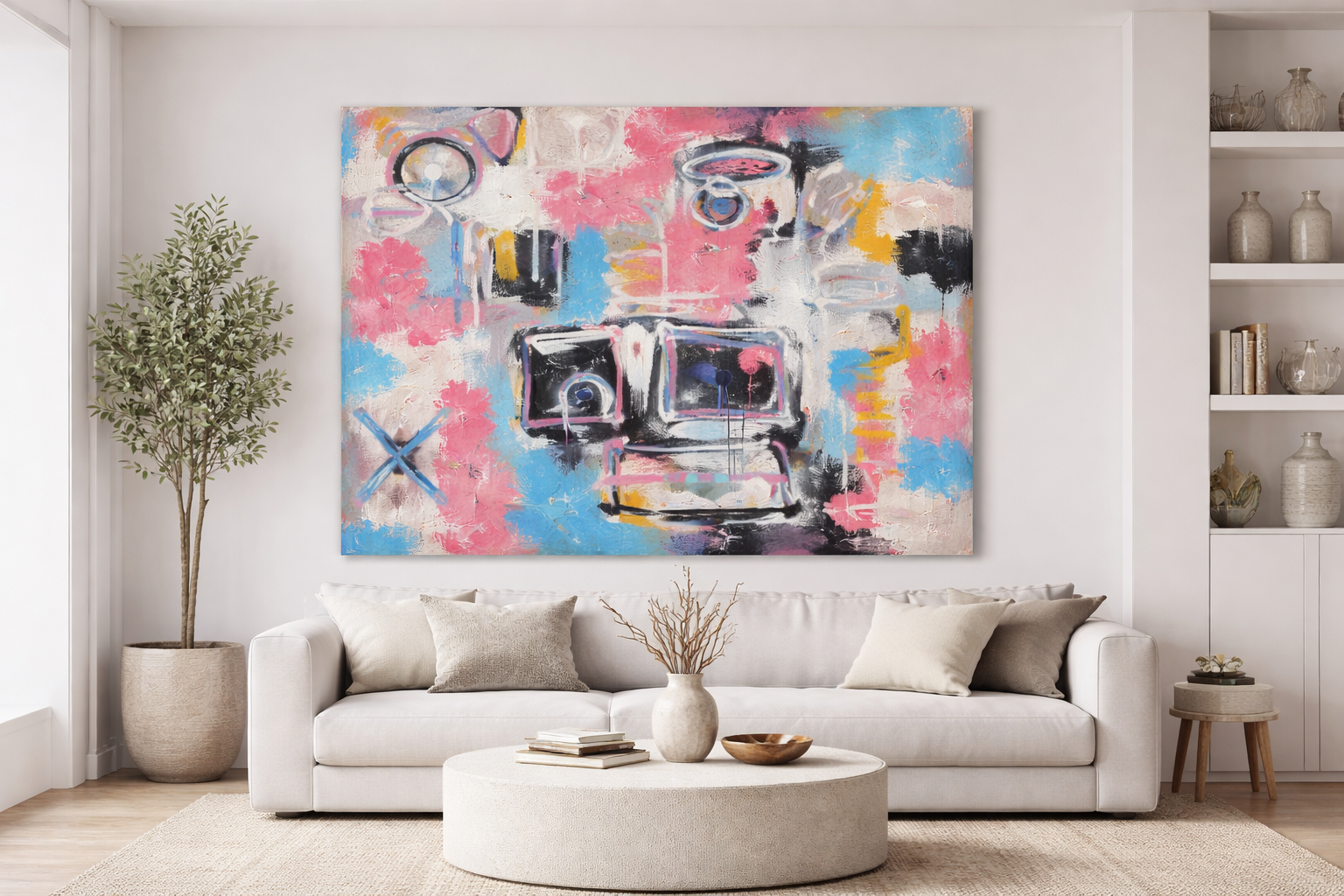
I work primarily in mixed media, combining acrylic paint, spray paint, oil stick, pencil, ink, and other materials to build layered surfaces. I am drawn to materials that can be added, removed, obscured, and reworked over time, allowing the painting to develop through accumulation and revision.
Texture plays a central role in the work. Layers are built, interrupted, scraped back, and reintroduced, creating surfaces that reflect the history of their making. Some marks remain visible while others become partially concealed beneath subsequent layers, contributing to a sense of depth and complexity within the painting.
Scale is equally important. Working on large canvases allows me to engage physically with the surface and create paintings that can be experienced both from a distance and up close. From across a room, the work functions as a complete composition. As the viewer moves closer, smaller details, textures, and relationships begin to emerge.
The physical surface is an essential part of the experience. Evidence of revision, material interaction, and accumulated decisions remains embedded within the work, creating qualities that cannot be fully conveyed through a photograph.